

Prepared cabbage, carrot and bean filling only feeds reliably when its cut size, moisture and temperature are controlled before it reaches the forming equipment. You will be able to map the full preparation-to-packing workflow, calculate useful output, identify machine limitations and prepare a supplier trial that reflects your Delhi kitchen.
Key takeaways
- Cut filling uniformly and remove excess water before hopper loading.
- Match hopper capacity and hourly output to your Delhi order schedule.
- Confirm cleaning access, electrical supply and spare-part support before purchase.
- Test portion weight, wrapper sealing and discharge with your own filling.
What an automatic spring roll machine does with prepared vegetable filling
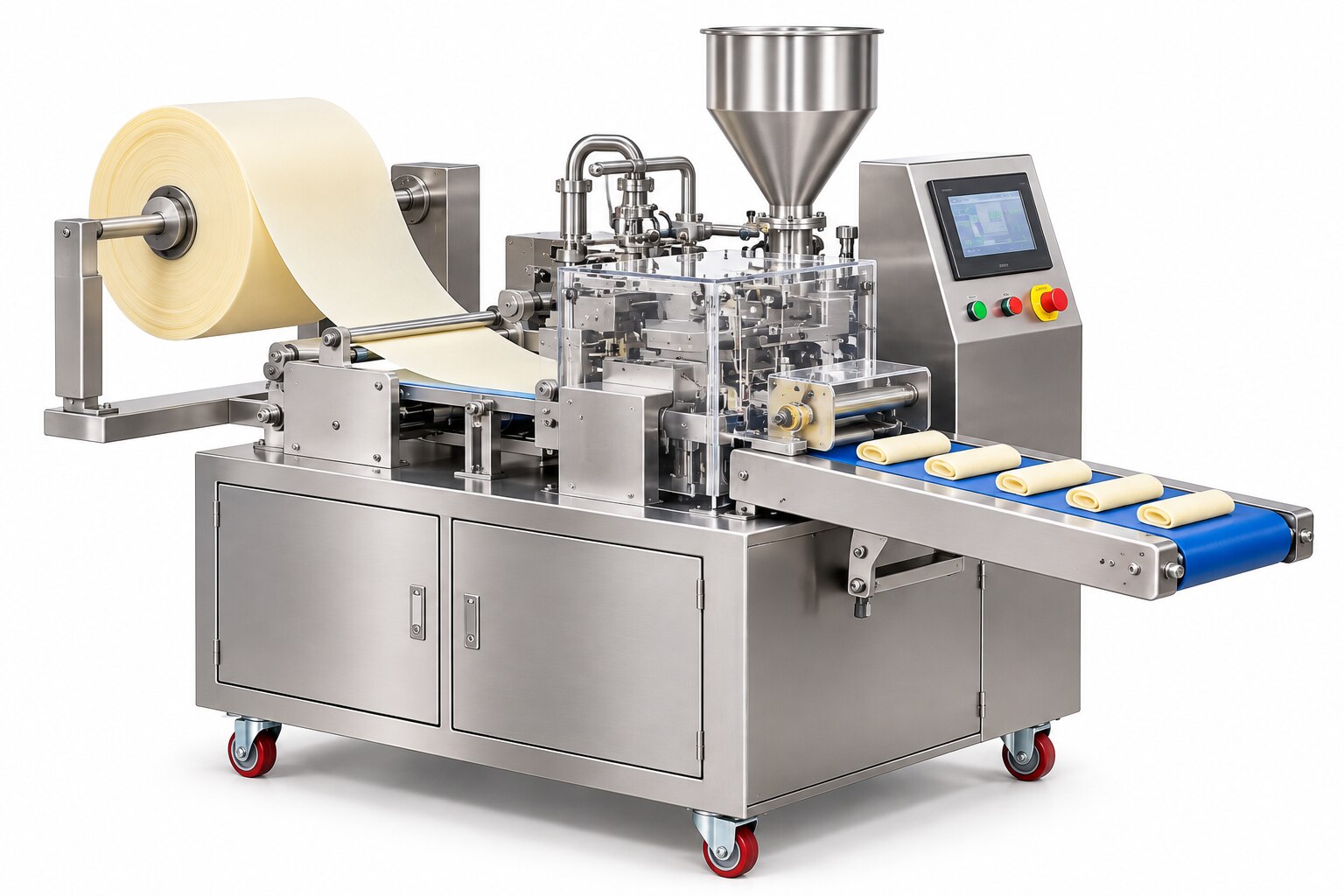
A spring roll machine takes prepared vegetable filling from a hopper, portions it, places it on a wrapper, folds and seals the roll, then discharges it for packing, frying or freezing. The automated sequence can cover hopper feeding, portion dosing, wrapper placement, folding, sealing and discharge.
“Automatic spring roll machine in Delhi” is not a standard equipment category. One supplier may mean a wrapper-forming and filling line; another may mean a unit that folds and seals pre-made pastry sheets. Confirm whether wrapper making, filling, folding, sealing, cutting and frying are included before comparing quotations.
| Equipment | What it usually handles | What you must not assume |
|---|---|---|
| Spring roll machine | Long rectangular wrapper placement, filling, folding and sealing | Frying or wrapper making is included |
| Gyoza or dumpling machine | Rounded or pleated dumplings with shaped edges | It produces long rectangular spring rolls |
| Skin-making machine | Batter preparation and thin wrapper or skin forming | It fills, folds or seals finished rolls |
A commercial spring roll maker suits high-volume restaurants, central kitchens, caterers, frozen-snack manufacturers and takeaway kitchens that repeat one recipe at scale. It still often depends on separate chopping, cooking, cooling, packing and frying equipment.
Check the complete process boundary: a machine that forms and seals rolls does not remove labour for preparing cabbage, carrot and beans, cooling the filling, loading the hopper, inspecting seams or transferring finished pieces. A live trial with your wrapper and prepared vegetable filling exposes gaps hidden by a supplier’s demonstration.
How to prepare vegetable filling for consistent feeding and sealing
Use a defined coarse shred, dice or short strip before loading the hopper; do not feed long strands, irregular chunks or wet mince. Long strands wrap around the auger and bridge the hopper, while uneven pieces disrupt portion dosing. Wet mince tears wrappers, prevents seam closure and leaks during frying.
- Wash and sort cabbage, carrot and beans; remove damaged pieces and keep raw ingredients separate from cooked filling.
- Cut to the tested shape, cook or season, then dewater. Avoid high-speed processing that turns cabbage and carrot into pulp.
- Weigh the batch before and after dewatering and record percentage loss: (before weight minus after weight) ÷ before weight × 100. Squeeze a handful gently; free water means more draining is needed, but do not crush the vegetables.
- Cool the filling promptly, hold it chilled, and label each batch with recipe, time and use-by details. Apply first-in-first-out rotation.
- Load only the tested filling condition into the spring roll machine, then check feeding, portion weight, wrapper placement and seam closure before packing.
- Pack finished rolls for immediate cooking or freezing, and clean between recipes, including the hopper, auger and forming parts.
| Tool | Cut and operating trade-off | Best use |
|---|---|---|
| Vegetable chopper | Fast coarse cuts; simple cleaning; less waste than pulping | Larger batches |
| Adjustable slicer or shredder | Consistent strips; slower setup and more parts to clean | Recipe-specific sizes |
| Food processor | Fast small batches; irregular cuts, greater waste and pulp risk | Limited chopping only |
How to match output, filling condition and machine choice to Delhi orders
Calculate required output as: daily demand ÷ (operating hours minus changeover hours) ÷ (1 − expected reject rate). For 10,000 rolls, 8 hours, 1 hour of changeover and 5% rejects, the target is 1,462 acceptable pieces per hour.
Compare this with finished pieces per hour at your specified piece weight, not a headline kilograms-per-hour or pieces-per-minute claim.
| Filling condition | Supplier must state | Main risk |
|---|---|---|
| Freshly cooked | Accepted temperature and drained consistency | Steam and free water cause bridging, torn wrappers and leaking seams |
| Chilled | Accepted temperature range and holding limit | Cold, compact filling can dose unevenly |
| Raw | Particle size, temperature and consistency limits | Irregular vegetables cause double feeding and exposed filling |
| Frozen | Whether thawed filling is permitted and its drainage condition | Ice and released water block feeding and weaken seams |
Request checks for wrapper dimensions, hopper volume, portion range, auger or piston suitability, sealing method, speed control, changeover time, reject handling and conveyor layout. Test for double feeding, underfilled rolls, uneven length, exposed filling and residue in forming parts.
- Use a vegetable chopper that produces the agreed cut size, not pulp.
- Choose a semi-automatic machine or manual station for low volume, frequent recipe changes, irregular pieces, limited floor space or hand-controlled filling.
- Keep labour for preparation, hopper loading, tray loading, inspection, packaging and cleaning.
A commercial spring roll maker still needs this labour, and a spring roll machine does not replace a vegetable chopper or guarantee acceptable rolls without a recipe-specific trial.
What the installation, cleaning and operating routine must support
Fit safely only if a site survey confirms utilities, clearances and hygienic access, not just the footprint in a brochure. An automatic spring roll machine in Delhi must leave room for loading, cleaning, maintenance and safe movement through the access doorway.
- Specify food-contact stainless steel by grade, surface finish, smooth weld quality, removable hopper, auger and forming parts, and access to every dead space. Inspect corners where cabbage, carrot, onion, spices, sauce and oil-based seasoning could lodge.
- Ask for the dismantling sequence for the hopper, auger, forming parts and sealing area, required tools, permitted sanitation chemicals, washdown limits, and realistic cleaning and drying time. Dry every part fully, then record the sanitation check.
- Confirm single-phase or three-phase supply, connected load, earthing, compressed-air pressure and consumption if applicable, drainage, ventilation and exhaust requirements.
- Measure footprint, doorway and corridor width, operator clearance, maintenance access and space for trays. Place preparation before cooling, forming after cooling, then packing before freezing or frying; do not force raw preparation traffic through the clean packing area.
- Require a written spares list covering belts, blades, sealing parts, sensors, augers and food-grade gaskets, plus local availability and technician access for calibration.
A spring roll machine that cannot be opened, inspected, dried and restored within the daily production schedule will turn residue into downtime and contamination risk.
How to buy and validate an automatic spring roll machine in Delhi
Demand a process-specific specification before you approve an automatic spring roll machine in Delhi. A supplier must inspect your site and confirm production target, wrapper dimensions, filling recipe and particle size, piece weight, frying or freezing method, electrical phase and connected load, compressed-air pressure and consumption, footprint, access clearance and changeover needs.
- Confirm whether the machine makes wrappers or forms pre-made sheets.
- Require written acceptance criteria for output and product quality.
- Run a live trial with your own wrapper and prepared vegetable filling, not smooth supplier paste.
- Record sustained finished pieces per hour at the specified weight, piece-weight variation, wrapper uniformity, seam-open rate, reject rate, hopper refills, cleaning time and changeover time.
- Ask for warranty terms, operator training, dismantling and cleaning instructions, spare-part availability and Delhi service response time.
Reject a demonstration that hides wet filling, irregular particles or manual rework. Confirm whether frying is included; a commercial spring roll maker may only form and seal.
| Cost comparison | Include | Decision question |
|---|---|---|
| Purchase price | Machine, installation and utilities | What is excluded? |
| Labour saving | Loading, forming and inspection hours removed | Who still prepares, packs and cleans? |
| Ownership cost | Training, downtime, maintenance and spare parts | Does recipe flexibility justify the risk? |
Turbo Tech Machinery can discuss the process, but its published descriptions do not establish a dedicated automatic spring roll machine; confirm the exact model, scope and quotation.
Related products
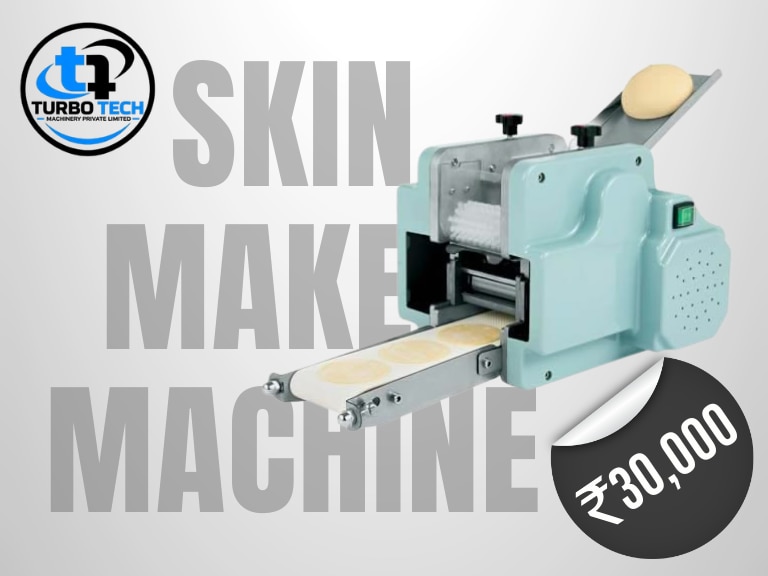 | Dumpling Wrapper Making Machines ₹30000 Preparing uniform wrappers is an important step in making dumplings and wontons. View product → |
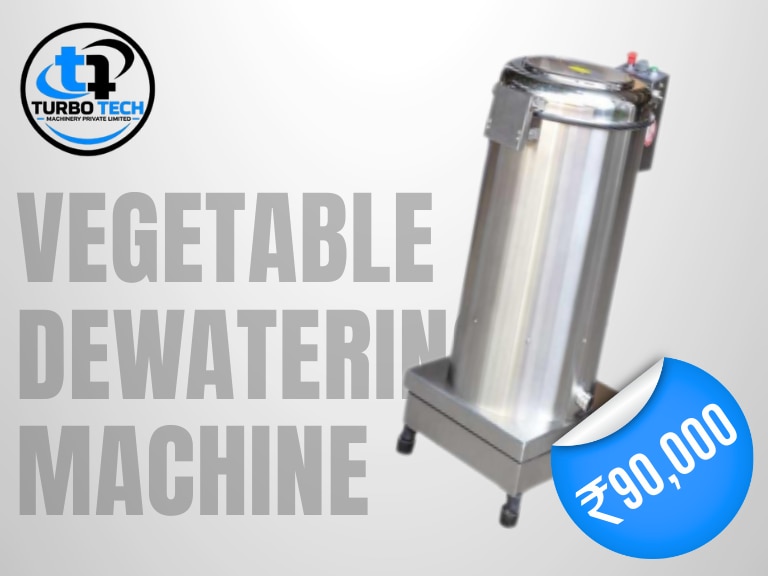 | Vegetable Dewatering Machines ₹90000 Excess moisture in prepared vegetables can make filling preparation more difficult to manage. View product → |
Frequently asked questions
What does an automatic spring roll machine do with prepared vegetable filling?
It feeds filling from a hopper, doses a portion onto each wrapper, folds and seals the wrapper, then discharges the finished roll for packing, frying or freezing.
How should vegetable filling be prepared for machine feeding?
Chop vegetables into uniform pieces, cook them to a consistent texture, drain excess moisture and cool the filling before loading the hopper. Wet or oversized pieces can disrupt dosing and sealing.
How do you choose a spring roll machine for Delhi orders?
Compare required rolls per hour, portion weight, wrapper size, filling texture, available floor space and electrical supply with the machine specification. Test the machine using your actual filling before ordering.
What installation and cleaning requirements should you check?
Provide enough space for loading, discharge and operator access, then confirm power requirements, sanitation access and removable food-contact parts. Establish a routine for clearing filling residue from the hopper, dosing parts, folding guides and sealing area.
How can you validate an automatic spring roll machine before buying?
Run a trial with your prepared filling and wrapper, then check portion weight, roll dimensions, seal strength, reject rate, cleaning time and output over a sustained test.
Related product
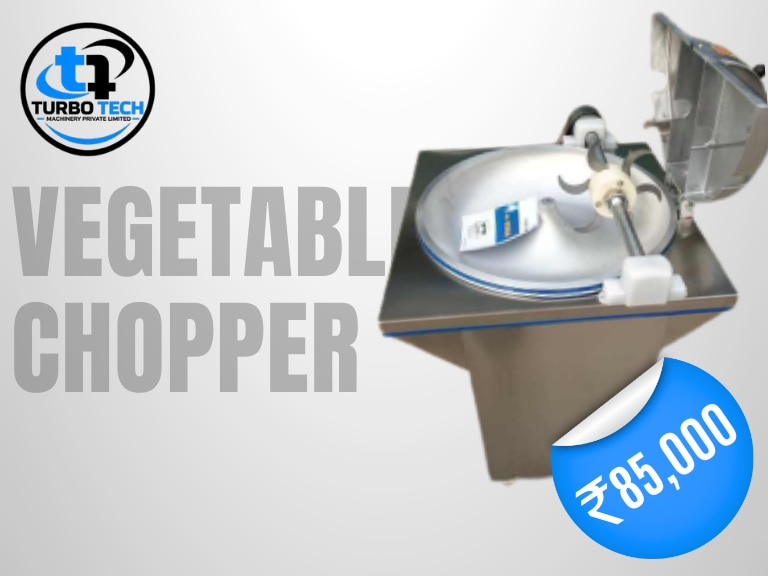 | Commercial Vegetable Processing Machines ₹85000 Preparing vegetables for fillings and bulk cooking can take considerable time when handled manually. View product → |