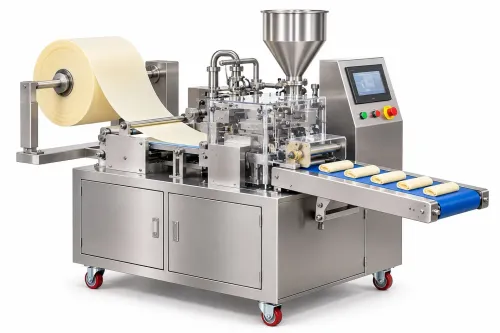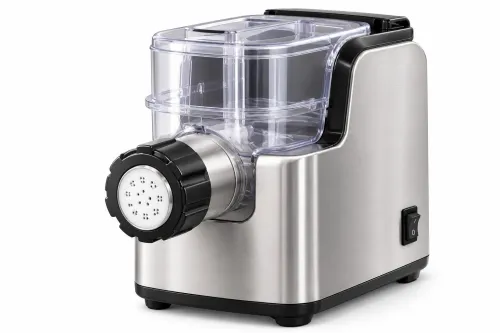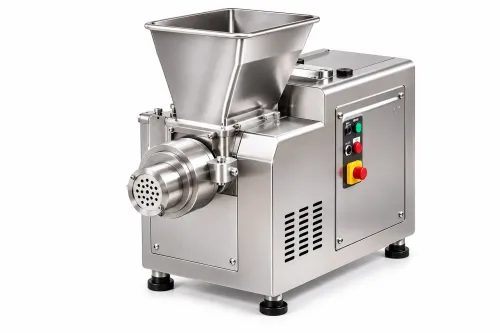


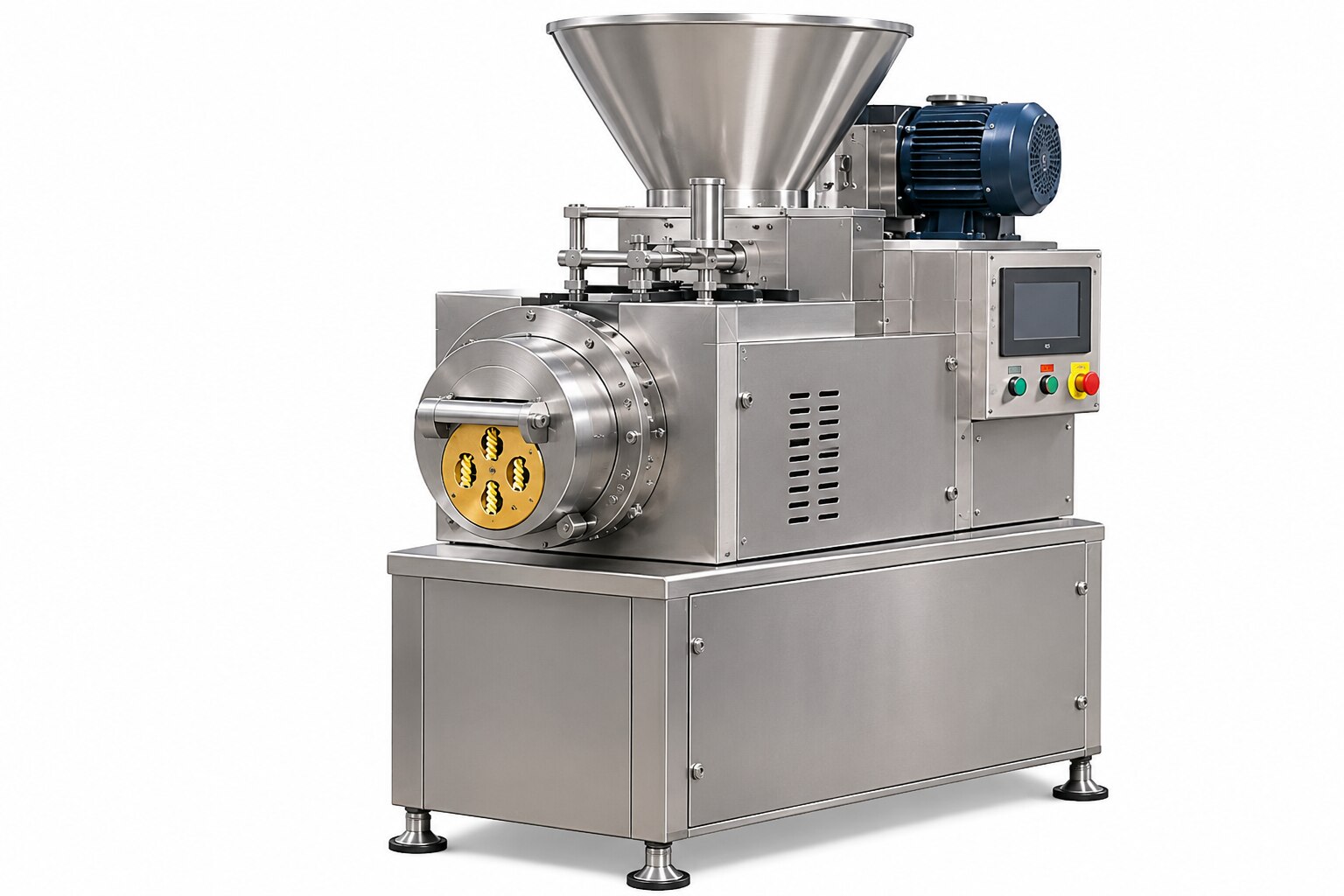
A stainless steel dough kneader can prepare dough for a fusilli line when its torque, mixing action, hygiene design and discharge method match the stiff, low-moisture pasta recipe. You will be able to separate the kneader’s role from the extruder’s, specify the right equipment, and test the complete process before committing to a purchase.
Key takeaways
- Confirm the kneader handles firm, low-moisture pasta dough.
- Match kneader torque and restart capacity to the dough load.
- Test dough transfer and extruder feeding under full production conditions.
- Specify acceptance criteria for the complete fusilli pasta line.
When a stainless steel kneader is suitable for fusilli dough
Yes, a stainless steel dough kneader can prepare dough for a fusilli making machine if it handles firm, low-moisture pasta dough and feeds the extruder consistently. Stainless steel describes construction, not pasta compatibility. A dough kneader mixer must have enough torque and restart capacity for a stiff load.
| Stage | What it does | What it cannot do |
|---|---|---|
| Mixing | Hydrates flour and distributes water | Create the fusilli profile |
| Kneading | Develops a uniform dough structure | Replace extrusion pressure |
| Extrusion | Forces dough through a fusilli die | Hydrate dry pockets |
| Cutter | Sets the piece length | Correct a poorly formed spiral |
A mixer built for liquid batter, soft bread or roti dough may lack the torque to turn pasta dough. It may also stall or fail to restart under load. Check motor performance, blade geometry, usable batch capacity and discharge into the hopper.
Vacuum mixing reduces entrained air and helps produce dense dough with fewer voids. Atmospheric mixing can work, but check extrusion pressure, surface smoothness, internal voids and the finished pasta’s appearance. Air pockets can cause rough surfaces, weak spirals and inconsistent drying.
Successful dough preparation is not complete pasta production. You still need an extrusion unit, the correct fusilli die and a cutter; the die forms the spiral, while the cutter sets its length.
Choose a fusilli dough formula the kneader can handle
Reliable fusilli extrusion starts with a firm, crumbly dough that is uniformly hydrated, not elastic like bread dough. Select a fusilli making machine dough kneader for mixer duty that can hydrate stiff pasta dough without overheating it.
| Base | Texture and performance | Machine consideration |
|---|---|---|
| Durum semolina | Firm bite, strong spiral definition | Usual choice; needs sufficient torque and controlled hydration |
| Fine semolina | Smoother surface and more uniform texture | Can alter absorption and extrusion pressure |
| Wheat flour | Softer texture and different dough strength | Test carefully for sticking, shape retention and die flow |
Set water by the flour’s absorption and the extruder’s behaviour, not by a fixed recipe percentage. Excess water creates sticky dough, weak spiral definition and unstable cuts; too little leaves dry pockets and raises the load on the dough kneader mixer.
Egg is a recipe choice, not a universal requirement. It adds moisture, fat and colour while changing dough strength, so test the kneader with the final egg or no-egg formula. Add salt as a controlled flavour and dough-system ingredient; it cannot correct poor hydration.
Control mixing time, dough temperature and rest time together. Keep the dough cool, preferably around 20–25°C, to prevent softening and premature gluten development. After mixing and resting, it should break into moist, firm granules that feed consistently rather than stretch, smear or form dense lumps.
Match the kneader, transfer system and fusilli machine
A kneader will feed a fusilli line consistently only when its usable dough batch weight matches the fusilli machine’s demand; nominal bowl volume is not enough. Compare motor torque, installed power, speed control, paddle or blade geometry, mixing time and restart performance under a stiff load.
Check bowl dimensions against the batch size, and align the discharge height with the hopper or feed opening.
| Transfer option | When it fits | Check before approval |
|---|---|---|
| Direct discharge | The extruder accepts the kneader’s outlet flow | Confirm height, outlet size and continuous feed |
| Portioned dough | The line requires manageable pieces | Check portion weight and feed-throat clearance |
| Rest, then feed | The recipe specifies a dough-rest period | Prevent drying, compaction and uneven hydration |
| Crumbling | The extruder requires loose granules | Confirm granule size will not bridge the throat |
For a pasta maker machine in Delhi, require confirmation of the site’s voltage, phase, frequency and available installed power; do not copy a catalogue rating. Specify food-contact materials for the stainless steel dough kneader, including 304, 316 or 316L grade where relevant, plus seals, gaskets, lubricants and hoses.
Inspect welds for crevices, confirm drainage, and demand access around shaft seals and discharge gates. Flour and durum residue around these points extends clean-down and creates allergen cross-contact risk during changeovers, so require tool-free opening, inspection and documented cleaning access.
Run a complete compatibility test before purchase
A water-only demonstration proves nothing about a stiff pasta dough. Require a representative trial with the intended semolina or flour, water percentage, egg or no-egg formula, batch weight and production rate. Test the complete fusilli making machine dough kneader for mixer setup, not the kneader alone.
Record these results during the trial:
- Mixing time, dough temperature, dry pockets and final dough texture
- Motor load or extrusion pressure, output rate and every stoppage
- Discharge time, manual scraping required, dense lumps and excess air introduced during transfer
- Spiral definition, dimensions, ragged edges, breakage, cut-length consistency and shape retention after drying
Feed the dough through the actual fusilli die and cutter. A correct die cannot compensate for dough that arrives overheated, unevenly hydrated or aerated.
| Check | Acceptable evidence | Failure sign |
|---|---|---|
| Restart | Stable load and flow after a realistic pause | Stalling, blockage or pressure surge |
| Transfer | Loose, feedable dough reaches the hopper | Bridging or one dense mass |
| Finished pasta | Consistent spirals that retain shape after drying | Flattening, ragged edges or breakage |
| Cleaning | Recorded clean-down time with visible access | Residue trapped at seals, hinges, gates or feed interfaces |
Repeat the test after stopping and restarting the line. Turbo Tech Machinery can help compare the kneader’s torque and discharge arrangement with the selected fusilli equipment; request these trial records instead of accepting a catalogue claim.
Related product
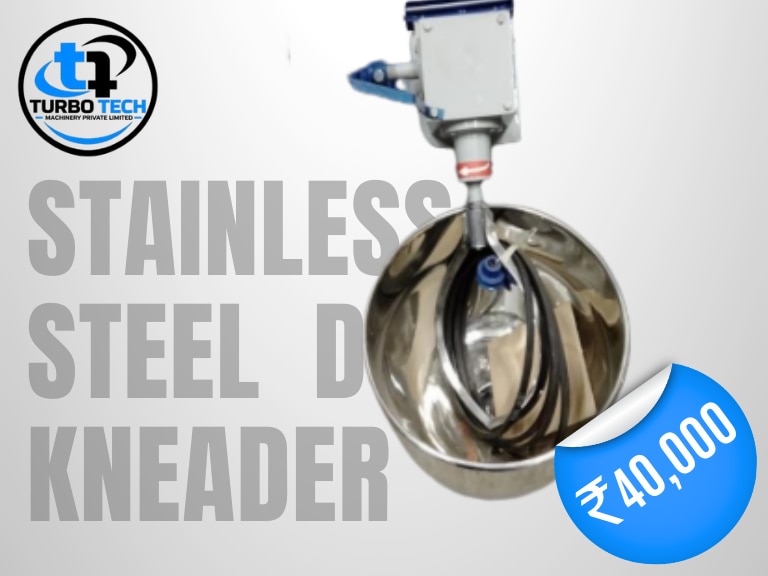 | Commercial Dough Kneading Machines ₹40000 Preparing dough repeatedly by hand adds time and physical effort to commercial kitchen operations. View product → |
Write the acceptance specification for the complete pasta line
The purchase specification must bind the recipe, kneader and extruder to one acceptance test, not leave compatibility to catalogue claims. For a pasta maker machine in Delhi, verify utilities at the installation address.
- State the flour or semolina type, water percentage, egg inclusion, salt level, batch weight, mixing time, dough-temperature limit and rest time.
- State usable throughput, fusilli die size, cutter speed, acceptable extrusion-pressure or motor-load range, spiral dimensions and maximum breakage rate.
- Record drying-trial results, including shape retention, cracking, uniform drying and cut-length consistency.
- Identify the food-contact material and grade for the bowl, shaft, paddles, discharge gate, hopper, die, cutter, transfer surfaces, hoses and every other wetted component; specify 304, 316 or 316L stainless steel where selected.
- Require certificates and compatibility data for seals, gaskets, lubricants and coatings, including allergen-cleaning suitability.
- State the electrical supply, phase, frequency, installed power, cleaning method, spare fusilli dies and service-response time at the installation address.
- Define a changeover inspection for flour residue around shaft seals, discharge gates, lid hinges and the die-feed interface.
The dough kneader mixer passes only after it produces the specified dough and the complete extruder line maintains continuous flow, clean fusilli definition and repeatable shape at the intended rate. Reject approval if pressure, load, breakage, drying or clean-down results fall outside the recorded limits.
Frequently asked questions
When is a stainless steel kneader suitable for fusilli dough?
It is suitable when the dough kneader mixer can process firm, low-moisture pasta dough and deliver a consistent feed to the fusilli extruder. Stainless steel construction alone does not prove compatibility.
What should you check in a fusilli dough formula?
Check the dough’s moisture level, batch size, mixing time, firmness and temperature, then confirm that the kneader can handle the required load without stalling or producing uneven hydration.
Why must you match the kneader, transfer system and fusilli machine?
The kneader must produce dough at a rate and consistency the transfer system can move and the fusilli machine can extrude. Poor matching causes surging, bridging, inconsistent shapes or stoppages.
What should a complete compatibility test include?
Run the actual formula through the kneader, transfer equipment and fusilli machine at the intended batch size and production rate. Check restart performance, feed consistency, extrusion stability, product shape and cleaning access.
What belongs in the acceptance specification for a fusilli line?
Specify the dough formula, batch size, mixing time, throughput, transfer method, extrusion performance, restart requirements, product dimensions, test conditions and pass-fail criteria for the complete line.