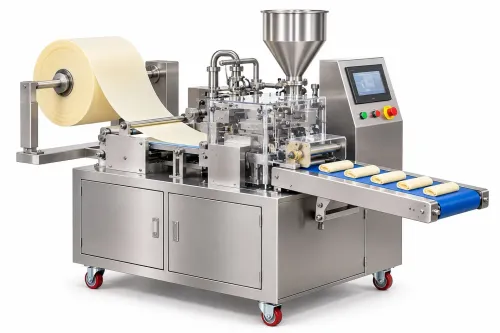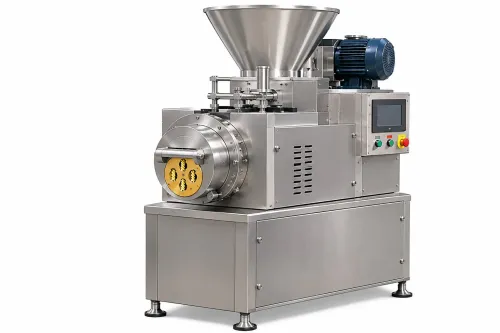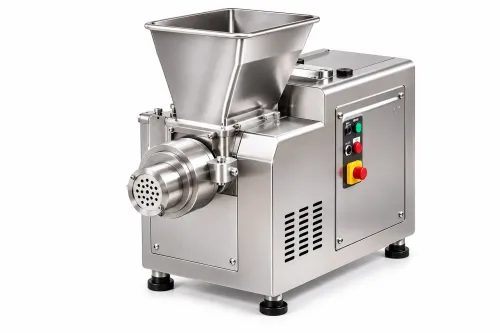


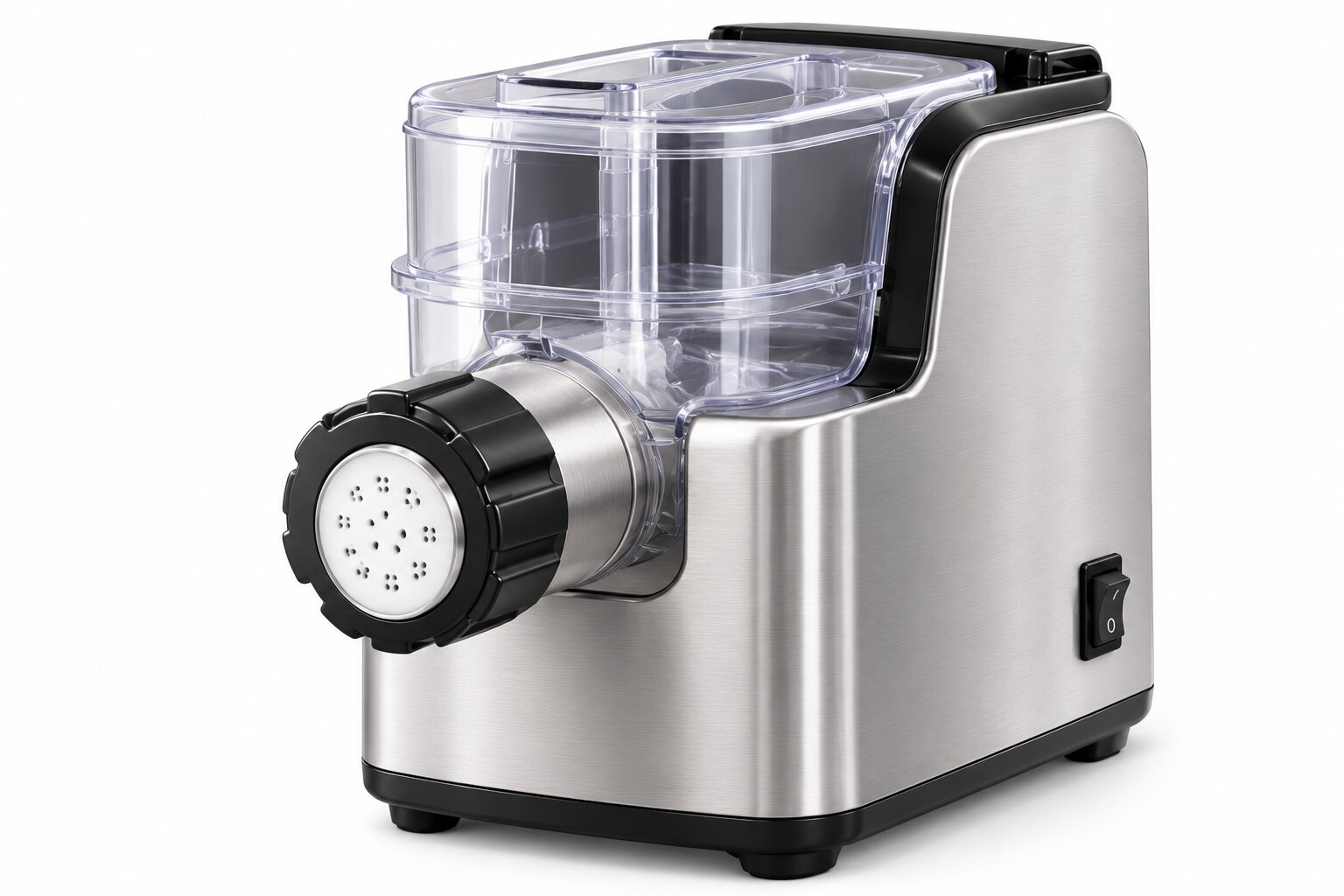
An udon noodle maker and a dough kneader handle different production stages, so choosing one depends on where your kitchen bottleneck occurs. By comparing dough load, kneading action, sheeting and cutting ranges, hygiene access, electrical supply and after-sales support, you can specify the right machine or justify buying both.
Key takeaways
- Choose a kneader when dough development causes delays or inconsistent texture.
- Choose a noodle maker when rolling and cutting consistent strands is the bottleneck.
- Check bowl capacity, motor rating, speed control and batch size—not motor power alone.
- Confirm food-contact steel, spare parts and Delhi service response before ordering.
Decide whether your bottleneck is dough development or noodle forming
Choose a dough kneader when dough development is slow or inconsistent. Choose an udon noodle maker when staff already produce consistent dough but lose time rolling and cutting uniform strands. The machines solve different stages.
| Option | What it does | Choose it when |
|---|---|---|
| Dough kneader | Mixes flour, water and salt, then develops the dough | Dough quality or preparation speed is the bottleneck |
| Udon noodle maker | Takes rested dough through sheeting, gauging, reduction and cutting | You need consistent noodle width and faster forming |
| Both machines | Separates dough development from noodle forming | You make udon from scratch and both stages restrict output |
Buying both is not automatically faster. Udon dough often needs a covered rest before final sheeting, so resting trays or operator handling can become the new constraint. A continuous noodle line may therefore produce less usable output than a kneader, covered trays and a separate sheeter-cutter.
Calculate demand during the busiest two-hour service window, not from daily covers. Record kilograms of flour and finished noodles required per hour, then add time for resting, sheeting, cutting, dusting, portioning, cleaning and changeover. A machine sized for the daily total can still create a queue at service.
Match the kneader to stiff, salted udon dough
A stainless steel dough kneader is suitable for udon only if its drive handles a stiff, salted mix rather than just momo, roti or soft bread dough. Udon commonly uses 45–55% water against flour, plus salt, so a dough kneader mixer needs high torque and low tool clearance.
Do not treat a 25 kg bowl as a 25 kg udon capacity; the usable flour load will be lower.
| Action | Strength | Question to ask |
|---|---|---|
| Spiral | High torque and low clearance for dense dough development | Is the spiral rated for your stiffest batch? |
| Fork | Gentle, powerful development with less heating | What dough load and cycle time are permitted? |
| Planetary | Broader tool choices for varied recipes | Can the hook and gearbox sustain your udon batch? |
Request these figures in writing:
- Minimum and maximum flour load, total dough load, batch time and permitted duty cycle; compare kilograms, not bowl volume.
- One-speed or two-speed operation. One speed suits a narrow menu; two speeds allow slow incorporation followed by controlled development. High speed can raise dough temperature, increase sticking and overload belts or gearboxes.
- A paid trial using your flour, salt concentration, water level, batch size and target dough temperature.
- Both failure checks: a tiny batch can sit below the tool and leave flour unmixed, while an excessive load can trip thermal protection or strain the drive. A trial reveals this; a no-load demonstration does not.
Compare the specifications that determine usable production
A quotation is useful only when it states usable production, not a bowl’s advertised volume or a nominal motor size. Ask for the following figures and features in writing.
| Machine | Specifications to require | Failure to avoid |
|---|---|---|
| Commercial dough kneading machine | Usable flour load, dough load, bowl diameter and depth, motor power, rated current, kneading speed, cycle time and permitted duty cycle; removable or fixed bowl; dough hook, spiral or fork; safety guard, emergency stop, timer and variable-speed control | A large bowl that accepts too little stiff, salted udon dough, or a tool that leaves a small batch unmixed |
| Udon noodle maker | Adjustable sheet thickness, number of reduction passes, finished noodle width, interchangeable cutters and portioning options | One fixed roller or cutter that produces one width, making thick udon and thinner noodles impossible on the same unit |
| Electrical installation | Voltage, phase, frequency, rated current, isolator requirements, starting-current information and overload protection | Comparing a single-phase quotation with a three-phase quotation because both list the same motor power |
Test the smallest and largest intended batches with your recipe. No-load running proves little about dense dough: under-loading can leave flour below the tool, while overloading can trip thermal protection, stretch belts or damage gearboxes.
Ask for a paid production trial that records batch time, dough temperature and completed output. Confirm the cutter changeover time and portioning method before accepting a machine that appears faster on its specification sheet.
Build the workflow around resting, sheeting and service portions
Build each day’s udon workflow around dough relaxation, sheeting and weighed service portions; the machine is productive only when these stages stay balanced.
1. Weigh flour, water and salt separately. Add them at the dough kneader’s slow setting, then develop the dough without letting the batch heat excessively; excess heat makes sheeting difficult and irregular.
2. Remove the dough, cover it and allow your documented rest period. Do not send freshly mixed dough straight to final sheeting, because the relaxed dough feeds more evenly and resists less.
3. Divide the rested dough and use progressive reduction passes. Forcing one thick lump through an aggressive setting overloads the rollers and produces uneven thickness.
4. Cut the sheet to the required udon width. Apply a controlled amount of flour or starch, separate the strands, weigh service portions and place them in covered trays.
5. Cook portions to order, or chill them through a documented cooling process when advance preparation is part of the menu. Keep raw dough, cut noodles and cooked noodles in separate containers, with production time and use-by labels.
6. After every production cycle, remove soil with food-safe detergent and apply the specified sanitiser. Clean cutters, scrapers, the bowl, shaft and guards; never direct high-pressure water at bearings, switches or motor housings. Salt residue can pit stainless steel, while abrasive pads scratch its passive surface.
7. Compare the full workflow before buying a continuous udon noodle maker. A kneader, covered resting trays and separate sheeter-cutter can outperform a continuous line when resting or operator handling is the bottleneck.
Inspect food-contact construction and Delhi service support before ordering
Two machines with the same motor rating can differ sharply in hygiene and uptime. Compare the food-contact construction, access for cleaning and Delhi service support before choosing a stainless steel dough kneader or noodle line.
| Check | Ask or inspect | Why it matters |
|---|---|---|
| Bowl, hook or spiral, shaft and guards | Confirm the stainless grade; SS 304 is a common food-contact choice | Grade alone does not prove cleanability |
| Welds and drainage | Look for smooth welds, standing-water points and salt residue | Chlorides and harsh chemicals can pit stainless steel |
| Food-contact access | Inspect removable cutters, scraper areas, the bowl underside and shaft underside | Trapped flour and wet dough create contamination and pest-control risks |
| Guards and seals | Reject exposed threads, hollow sections and inaccessible gaps | Retained dough behind these parts is difficult to remove |
Ask for the cleaning procedure, chemical limits and a written warning against high-pressure washing. The supplier should also state whether cutters, scrapers and guards can be removed without specialist tools.
For an udon noodle maker or dough kneader in Delhi, local serviceability is part of effective capacity. Ask Turbo Tech Machinery to record the exact udon batch load, electrical configuration and recipe-based trial conditions rather than quoting only bowl volume or motor rating.
Obtain these details in writing:
- Spare parts: belts, bearings, seals, cutters, scrapers and motor controls.
- Preventive-maintenance intervals and service response time.
- Gearbox and cutting-roller replacement terms.
- Labour and parts costs for common repairs.
Run a production trial with your flour, recipe and operator. A no-load demonstration cannot reveal retained dough, overloads, uneven cutting or cleaning delays.
Related product
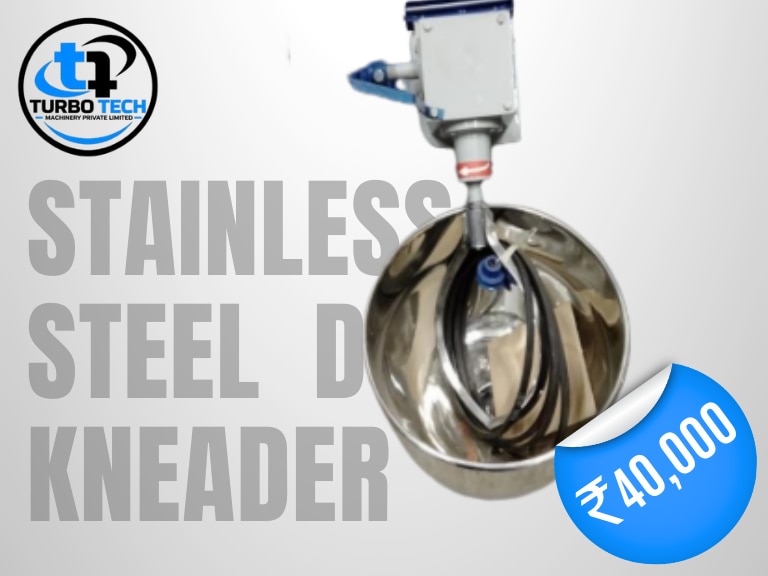 | Commercial Dough Kneading Machines ₹40000 Preparing dough repeatedly by hand adds time and physical effort to commercial kitchen operations. View product → |
Frequently asked questions
Should a Delhi restaurant buy an udon noodle maker or a dough kneader?
Buy a dough kneader when mixing and developing stiff, salted dough is slow or inconsistent. Buy an udon noodle maker when your dough is reliable but rolling and cutting strands takes too long.
What specifications matter in a dough kneader for udon?
Compare bowl capacity, usable batch weight, motor rating, kneading speed, cycle controls and whether the machine handles stiff, salted dough without overheating.
How should a restaurant organise an udon production workflow?
Plan separate stages for kneading, resting, sheeting, cutting and service portioning. Set batch sizes around your holding time, staff capacity and peak service demand.
What should you inspect before ordering commercial udon equipment in Delhi?
Inspect food-contact surfaces, stainless steel construction, cleanability, guarding, electrical requirements, spare-part availability and the supplier’s local service response.