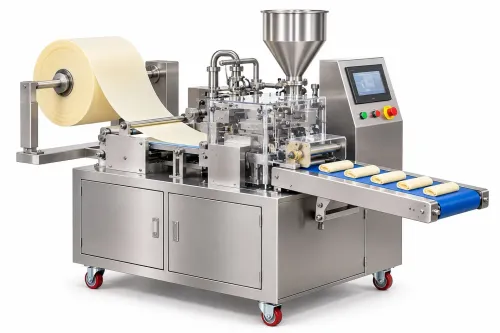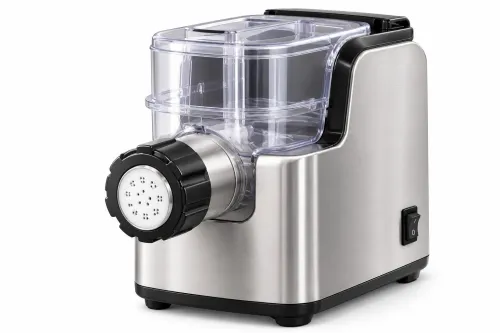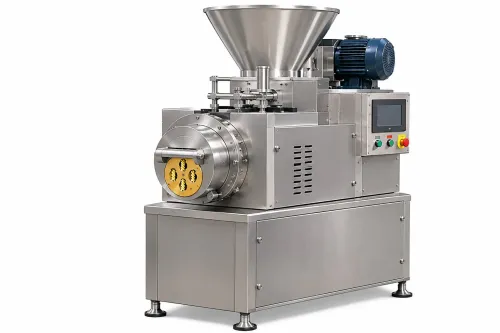


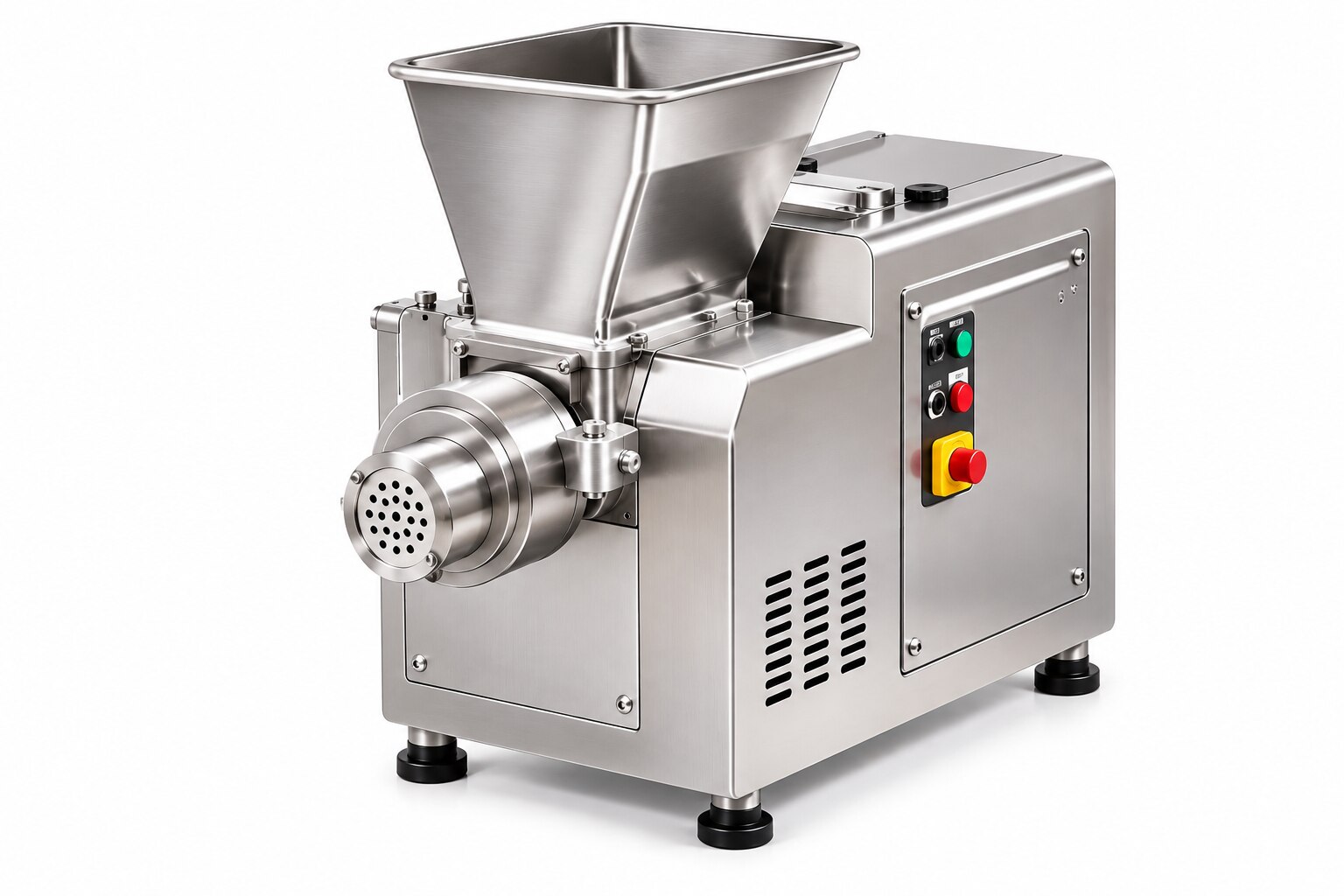
A search for one machine can describe several different systems: a roller sheeter, pasta extruder, noodle cutter, or circular wrapper cutter. Before requesting a quotation, identify the product you need, define the dough and wrapper dimensions, and compare saleable output rather than a best-case pieces-per-minute claim.
Key takeaways
- Choose the machine by finished product, not stainless steel casing.
- Confirm wrapper diameter, thickness, dough feed and cutting format.
- Measure usable wrappers per hour, including trimming and changeover time.
- Request a live trial using your dough recipe and target wrapper size.
Which machine does your product actually require?
A stainless steel pasta machine in delhi is not one machine: choose it by the finished product, not the casing material.
| Option | What it does | Choose it when |
|---|---|---|
| Roller sheeter | Compresses dough into a continuous, adjustable sheet | You need lasagne, ravioli sheets, or dough for a separate cutter |
| Pasta cutter | Slits a sheet into noodles, tagliatelle, or similar strands | You already have sheeting and want uniform noodle widths |
| Pasta extruder | Forces mixed dough through dies to form shapes such as macaroni or penne | You need shaped pasta that a roller cannot produce |
| Dumpling-wrapper machine | Feeds sheeted dough, cuts circular skins, and discharges them | You need momo or dumpling discs at a repeatable diameter |
A roller sheeter cannot make penne or macaroni; those shapes require an extruder and the correct die. A pasta cutter also does not form dumpling skins.
Specify the wrapper diameter, finished thickness, thickness tolerance, dough-sheet width, and dough formulation before comparing capacity. An 80–90 mm setup may not produce a usable 100–110 mm momo skin by changing a dial; it can require a different cutter or forming tooling. Include that tooling in the quotation.
Check for independent adjustment of sheet thickness and cutting position. A fixed cutter can create off-centre discs and excess trim when sheet tracking changes. A wrapper machine usually does not fill, fold, or seal momos, so its pieces-per-minute figure is not a complete production-line output.
How pasta sheets differ from momo and dumpling wrappers
A pasta roller can produce the dough sheet for dumpling skins, but it does not make finished wrappers by itself. You still need a circular cutter, controlled dough feeding, dusting or stacking, and separate filling, folding and sealing stages.
| Machine or output | Cutting stage | What it does not do |
|---|---|---|
| Roller sheeter | Separate slitter or disc cutter | Cannot produce macaroni, penne, or formed pasta without an extruder and dies |
| Wrapper machine | Integrated circular cutter | Does not necessarily fill, fold, or seal momos |
| Pasta extruder | Die shapes the dough at the outlet | Cannot replace a wrapper cutter for flat discs |
A dumpling wrapper machine is set up around a target disc diameter and finished thickness. A configuration producing 80–90 mm wrappers may not make usable 100–110 mm momo skins by changing a dial; it may require a different cutter, roller arrangement, or forming tool. Include those change-parts in the quotation.
For a skin maker machine in Delhi, specify wrapper diameter, thickness tolerance, dough-sheet width, dough formulation, and whether pre-sheeted dough is required. Check for independent adjustment of sheet thickness and cutting position. If the die stays fixed while the sheet tracks sideways, off-centre discs and ragged-edge waste follow.
A dumpling wrapper machine or skin maker machine in Delhi should also have stated spare-die availability. A custom cutter held up in service can stop production longer than the price difference between two machines.
The dough-to-wrapper workflow and specifications to confirm
A controlled dough recipe determines whether the workflow produces clean, stackable wrappers or a trail of cracks and jams. Trial the machine with your own flour, hydration, dough temperature, resting time and target thickness; dry dough cracks at the cut edge, while wet dough sticks to rollers, dies and conveyors.
- Mix the stated flour formulation, water ratio and any salt or oil until the dough is uniform.
- Rest the dough for the specified time and temperature so it relaxes before rolling.
- Portion it to a fixed piece weight; inconsistent portions create uneven sheet loading.
- Feed each portion through rollers, checking gap repeatability, alignment and sheet width.
- Cut discs with the selected die, then inspect diameter, edge quality and thickness tolerance.
- Dust only enough flour or starch to prevent sticking; excess dust affects sealing and cooking.
- Stack wrappers with a stated count and separator method, then fill and seal within the usable handling time.
- Steam, boil or cook the finished product and check whether thickness produces the required texture.
Your quotation must state the flour type or formulation, hydration percentage, dough temperature, resting time, portion weight, sheet width, wrapper diameter, finished thickness and thickness tolerance. It must also say whether the machine needs pre-sheeted dough, the loading method, and the rate for your wrapper size.
Confirm independent adjustment for sheet thickness and cutting position; a fixed die can produce off-centre discs and excess trim. Include the correct die or change-parts cost: an 80–90 mm setup does not automatically make usable 100–110 mm wrappers.
How to measure usable output instead of rated capacity
A machine rated at 60 pieces per minute may deliver far fewer saleable wrappers per shift. Wrapper diameter and thickness change cycle time, while dough hydration, resting, temperature and portion consistency affect feeding, sticking and breakage.
- Use the dough you will sell, mixed and rested to your planned recipe. Record flour type, hydration, dough temperature, resting time and piece weight before loading.
- Run the intended wrapper diameter and thickness for a sustained period, not a short demonstration. Record pieces produced per minute and separate saleable wrappers from ragged, torn, stuck or incorrectly sized pieces.
- Measure finished diameter, average thickness and minimum thickness across a sample. Check edge defects and whether wrappers break during stacking, handling or filling.
- Stop and restart the machine, clear a feed jam, change the cutting size and perform the normal cleaning routine. Record lost minutes, discarded dough and the labour required for each task.
- Calculate shift output as saleable pieces divided by total shift time, including loading, resting, feeding, adjustment, changeover, cleaning and stoppages. Record the operators needed.
Compare suppliers using saleable pieces per labour hour, not the headline rate. A fixed cutting position can increase off-centre discs and trim waste when sheet width or tracking varies, so include that loss in the acceptance result. A wrapper machine’s figure also excludes filling, folding and sealing unless those operations are tested separately.
What to include in a Delhi machine quotation and trial
A quotation that says “stainless steel” and “single phase” is incomplete. Ask for a written specification tied to your dough, wrapper diameter, finished thickness and daily saleable output—not only the machine’s pieces-per-minute claim.
1. Identify every food-contact part: stainless-steel grade and location, weld finish, fastener material, seals, belts and lubricant arrangement. A stainless outer body does not exclude painted mild steel or dirt-trapping crevices inside the food path.
2. Specify cleaning access. Request removable guards, cutter access, drain points and the permitted cleaning method. Flour dust can enter bearings, chains, switches and cooling vents; aggressive washdown can damage unprotected motors and sensors.
3. Record Delhi electrical requirements: voltage, phase, frequency, connected load, starting current, plug or isolator, circuit protection and earthing. Include the motor, heater, compressor and conveyor auxiliaries, even when the machine is advertised as single phase.
4. State environmental protection clearly. Ask for the IP rating of exposed electrical components and limits for flour-dust exposure, water spray and washdown.
5. Price change parts and downtime protection: spare cutters or dies, belts, bearings, seals, sensors and control components. For a momo wrapper machine in Delhi, also confirm die availability for each diameter; an 80–90 mm tool will not automatically make a 100–110 mm skin.
6. Put commissioning, operator training, service response time and warranty contacts in writing. Turbo Tech Machinery should be assessed on these deliverables, not catalogue capacity alone.
Before paying, run your flour, hydration, rested dough and filling at production settings. Count acceptable wrappers after setup, changeover, cleaning and rejects, then verify thickness, diameter, stacking and discharge. Confirm the machine does not fill, fold or seal unless those functions are explicitly included.
Related products
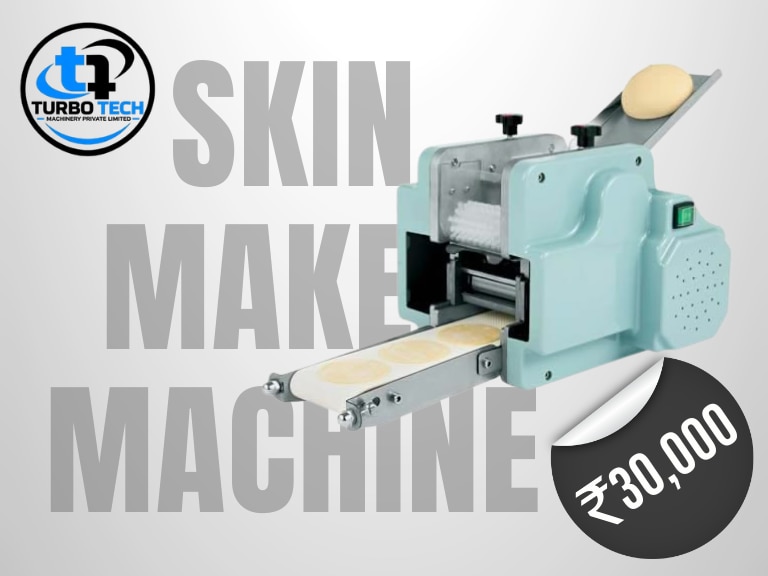 | Dumpling Wrapper Making Machines ₹30000 Preparing uniform wrappers is an important step in making dumplings and wontons. View product → |
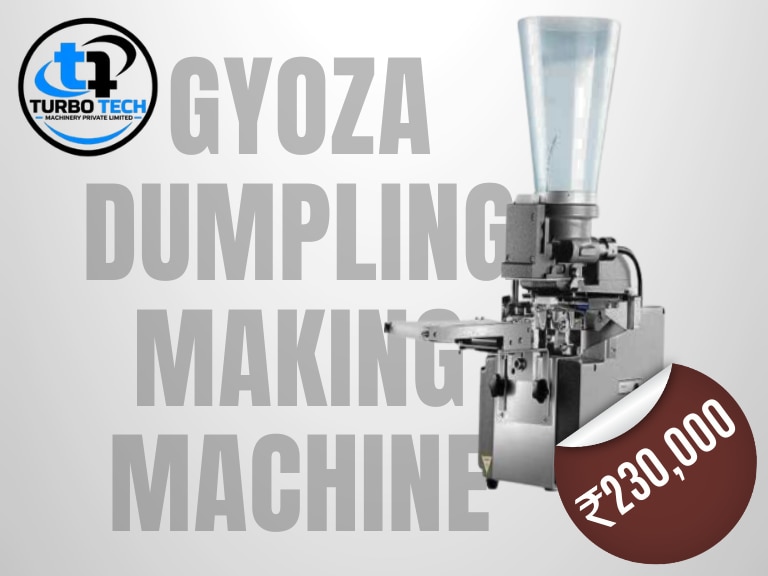 | Dumpling Making Machines ₹230000 Gyoza preparation involves repetitive filling and shaping work that can slow production when orders increase. View product → |
Frequently asked questions
How do pasta sheets differ from momo and dumpling wrappers?
Pasta sheets and dumpling wrappers use different dough characteristics, thickness targets, shapes and cutting requirements. Confirm the finished product before selecting the machine.
What specifications should you confirm for a dumpling wrapper machine?
Confirm dough-feed method, wrapper diameter, thickness range, cutter format, electrical supply, machine footprint and cleaning access.
How can you measure usable output instead of rated capacity?
Count wrappers that meet your diameter, thickness, shape and seal requirements, then include dough loading, trimming, changeovers and rejected pieces in the production test.
What should a Delhi machine quotation and trial include?
Ask for the machine model, output definition, specifications, included tooling, electrical requirements, delivery scope, warranty terms and a live trial using your recipe and target product.