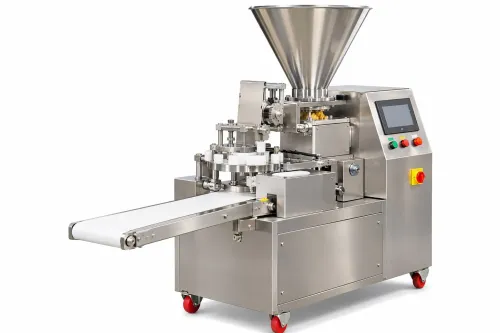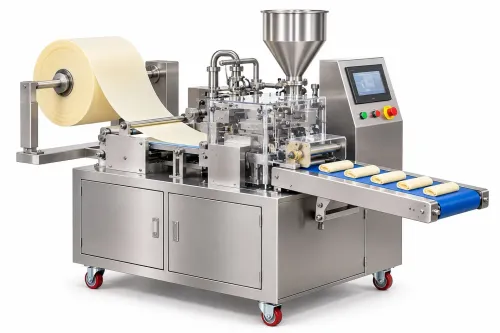


An industrial pasta extruder does not normally produce ready-to-use gyoza wrappers: it forms dough through a die, while gyoza equipment needs thin, round, elastic skins that seal reliably. You will be able to decide whether to place the extruder upstream, add sheeting and cutting stages, or exclude it from the wrapper line by testing dough, dimensions, filling and site utilities together.
Key takeaways
- Use soft, hydrated wheat dough rather than low-water durum pasta dough.
- Rest and condition extruded dough before rolling or gyoza forming.
- Test thickness, sealing, filling weight and throughput as one production line.
- Choose the setup only when space, hygiene and output targets align.
Can Pasta-Extruded Dough Meet Gyoza Wrapper Requirements?
A pasta extruder does not automatically produce dough suitable for gyoza wrappers. Conventional pasta dough often uses durum semolina and low water addition, while gyoza skins need a softer wheat-flour dough with enough hydration to roll thinly without cracking.
Feed the wrong formulation directly into a gyoza machine and expect split edges, weak seals and wrapper breakage.
Check these four properties before approving the dough:
- Hydration: the dough must be moist enough for flexible sheeting, but not sticky enough to foul rollers or wrapper cutters. Set water addition through a trial with the intended flour, not by copying a pasta recipe.
- Gluten development: mixing and compression must create a continuous, workable gluten network. Underdeveloped dough tears; overworked or overheated dough resists rolling and shrinks.
- Elasticity: the sheet must stretch slightly around the filling and return little after cutting. Excessive springback changes wrapper diameter and disrupts folding.
- Thickness: the finished sheet must hold a consistent gauge across its width. An extruder die opening alone does not guarantee the thin, round wrapper blanks that gyoza equipment needs.
An industrial pasta extruder machine in Delhi can support this process when its hydration range, compression pressure, die geometry, residence time and temperature rise suit the recipe. It is usually an upstream dough-preparation or portioning machine, not a drop-in wrapper source.
Rest the dough, pass it through calibrated rollers, and cut uniform circular blanks before filling and sealing.
What Must Happen Between Extrusion and Gyoza Forming?
Direct feeding is normally a no. An industrial pasta extruder produces a strand, tube or continuous sheet; a gyoza machine needs a thin, round, uniform wrapper or a sheet it can cut accurately. Use the extruder for dough preparation or controlled portioning, not as a complete wrapper-forming stage.
1. Rest the extruded dough before rolling. Give the flour time to hydrate and the gluten network time to relax; skipping this step can make the sheet contract, tear or resist the cutter.
2. Sheet the dough through calibrated rollers. Set the gap for the target wrapper thickness, then check thickness across the centre and edges. A thick edge can jam the feed, while a thin patch can split during sealing.
3. Condition the sheet for consistent moisture and temperature. Dry dough creates cracked edges; warm, tacky dough sticks to rollers and causes double feeding.
4. Cut round wrapper blanks with a specified diameter. Confirm the cutter matches the gyoza machine’s feeder, and remove trim before it reaches the filling station.
5. Match the wrapper conveyor speed to the depositor and folding unit. Inconsistent feed timing shifts the filling off-centre, leaving an incomplete seal or leakage during steaming.
Before choosing dumpling kitchen equipment, test the complete chain with the intended dough. Record wrapper weight, diameter, thickness, filling weight, seal failures, rejects and sustained output. A machine rated for pre-cut wrappers does not prove that it will accept dough supplied continuously by an extruder.
How Should an Extruder Fit Into an Industrial Gyoza Line?
Use the extruder upstream, not as a drop-in wrapper source. For industrial pasta extruder gyoza production, lay out the line so dough moves in one direction from preparation to steaming, with covered transfer points and matched conveyor speeds.
1. Mix wheat flour, water and salt in a batch mixer until the dough is uniform. Record water addition and dough temperature for every batch.
2. Feed the dough into the industrial pasta extruder for controlled compression and discharge. Use a die or portioning outlet that supplies dough suitable for rollers, not pasta strands intended for cooking.
3. Transfer the extruded dough to a covered resting hopper or tray. Resting allows hydration and gluten relaxation; feeding freshly extruded dough straight to forming can cause shrinkage and torn edges.
4. Send the rested dough through a sheeter and calibrating rollers. Set the final sheet thickness, width, moisture and temperature before it reaches the cutter.
5. Cut the sheet into uniform circular wrapper blanks, then place them on a timed conveyor. Check diameter, thickness and edge condition because variation causes mis-centering and leakage.
6. Meter filling onto each wrapper with a depositor. Match filling weight and deposit position to the wrapper diameter and fold pattern.
7. Feed the blanks into the folding and sealing unit. Synchronise wrapper spacing, filling timing and servo speed to prevent double feeding or incomplete seals.
8. Move sealed gyoza directly into a steamer, then cool, freeze or pack according to the product route. Keep rejected pieces separate and record the failure cause.
Which Tests Prove the Machines Work Together?
A witnessed acceptance test is the only reliable proof that an industrial pasta extruder with gyoza dumpling making machine in Delhi will work as one production line. Use your intended flour, hydration, resting time, filling, wrapper diameter, packaging route and operators; a demonstration with generic dough proves little.
Run the trial in this order:
- Record wrapper thickness, diameter, moisture, temperature and edge condition after sheeting and cutting.
- Match conveyor, feeder and depositor speeds, then check feed timing for double blanks, missed wrappers and filling mis-centering.
- Weigh individual wrappers and fillings, recording the average and the agreed tolerance.
- Test seal strength by handling, cooking and freezing the dumplings, then count leaks, open folds and torn skins.
- Run the line continuously long enough to expose heating, bridging, dough drying and operator-loading problems.
- Record pieces per hour, rejects by cause, changeover time, cleaning time and electricity, compressed air and water use.
Test results should be documented rather than accepted verbally.
| Test area | Evidence to demand | Failure sign |
|---|---|---|
| Recipe compatibility | Stable dough feed and repeatable wrapper weights | Cracking, sticking or distorted blanks |
| Dimensions and timing | Recorded diameter, thickness and synchronized speeds | Double feeding or off-centre filling |
| Filling performance | Fill-weight tolerance and clean sealing zone | Bridging, leakage or variable portions |
| Output and upkeep | Sustained rate, rejects, cleaning and utility log | Capacity falls after warm-up or cleaning overruns |
Turbo Tech Machinery should be asked to specify the industrial pasta extruder machine in Delhi against your actual electrical supply, earthing, drainage and compressed-air arrangement.
Related products
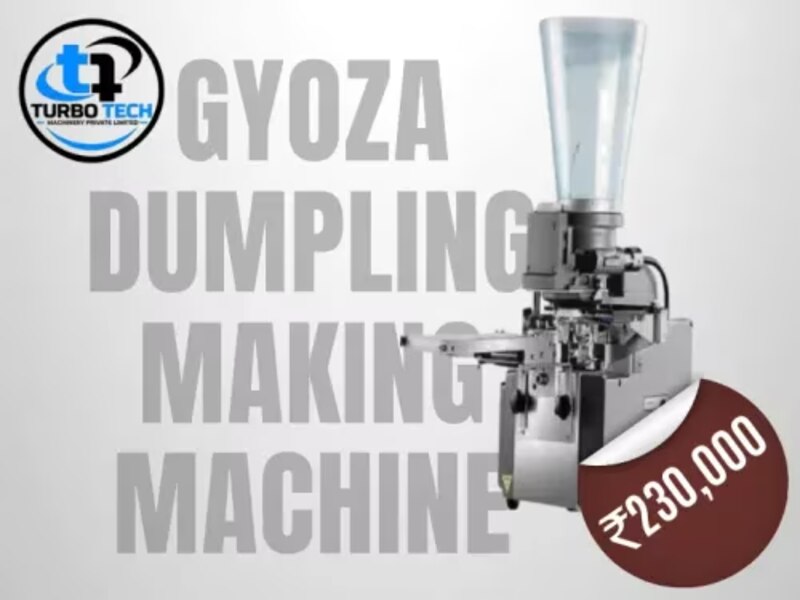
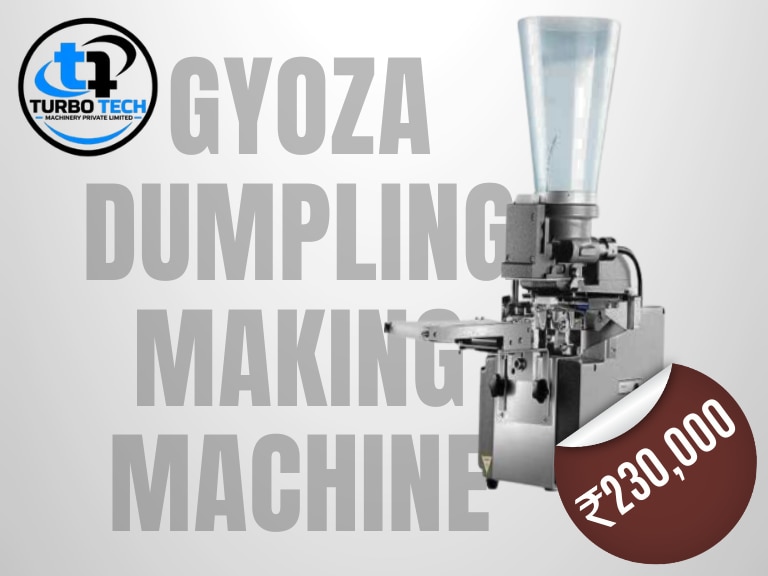 | Dumpling Making Machines ₹230000 Gyoza preparation involves repetitive filling and shaping work that can slow production when orders increase. View product → |
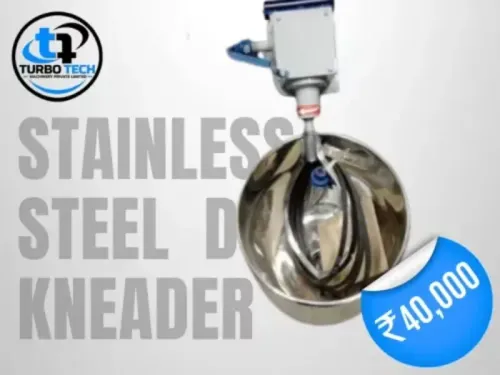
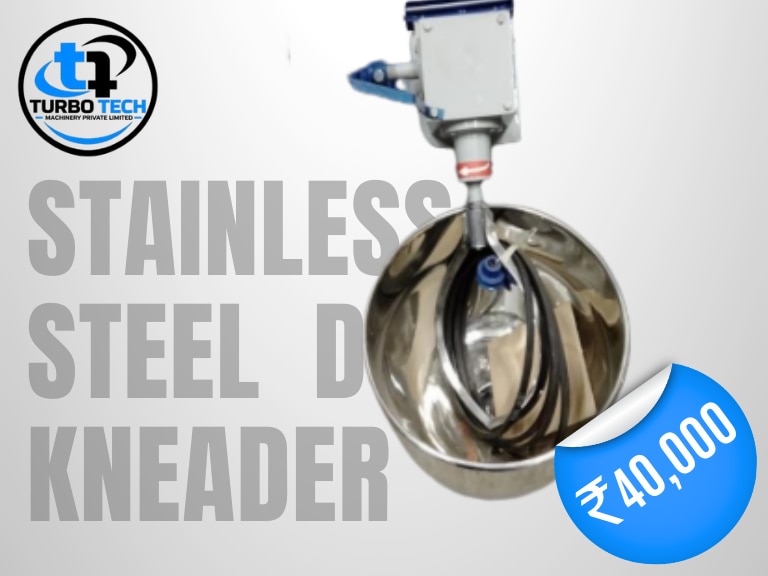 | Commercial Dough Kneading Machines ₹40000 Preparing dough repeatedly by hand adds time and physical effort to commercial kitchen operations. View product → |
When Is This Setup Suitable for a Delhi Food Operation?
A line is practical when the extruder supplies consistent dough to a sheeter, cutter and gyoza forming unit, rather than attempting to form dumplings directly. Standard round wrappers and repeatable fillings suit this arrangement; irregular shapes, wet mixtures and frequent recipe changes raise stoppages and rejects.
| Format | Practicality | Limitation |
|---|---|---|
| Standard round, pleated gyoza | Strong fit for automated forming | Requires stable wrapper diameter and thickness |
| Small or mini gyoza | Suitable after a trial | Small filling deposits expose timing errors |
| Large, open, soup or irregular dumplings | Weak fit | Needs different folding, sealing or depositing equipment |
Choose fillings that the depositor can portion without crushing cabbage, tearing meat or releasing free liquid. Coarse vegetables, oily mixtures and high-moisture fillings need auger, piston and hopper trials; leakage at the seal makes the line unsuitable until recipe or tooling changes.
Before approving these gyoza dumpling machine applications, check:
- The extruder, rollers and cutter match your wrapper width, thickness, temperature and moisture range.
- The site has verified three-phase or single-phase supply, voltage, frequency, earthing, protection, compressed air, water, drainage and connected load.
- Stainless contact parts, washdown access, allergen separation, chilled filling storage and pest-controlled handling meet your hygiene plan.
- The room accepts the full footprint, operator clearance, ceiling height, service access and product flow without crossing raw and cooked routes.
- A witnessed test records output, weights, leakage, rejects, cleaning time and utility use with your recipe and packaging route.
That evidence matters more than a catalogue capacity figure or a generic demonstration of dumpling kitchen equipment.
Frequently asked questions
Can pasta-extruded dough meet gyoza wrapper requirements?
Only after formulation and process testing. Gyoza wrappers need soft, hydrated wheat dough that rolls thinly and seals without cracking; standard low-water durum pasta dough is unsuitable without adjustment.
What must happen between extrusion and gyoza forming?
Transfer the dough hygienically, allow it to rest, condition its moisture, and feed it at a consistent temperature and texture before sheeting or forming.
How should an extruder fit into an industrial gyoza line?
Treat the extruder as the dough-preparation stage, followed by resting, sheeting, wrapper cutting, filling, folding, sealing and quality checks. Match each machine's feed rate and footprint.
Which tests prove the machines work together?
Run production trials that measure wrapper thickness, dough cracking, seal strength, filling weight, reject rate, changeover time and sustained throughput.
When is this setup suitable for a Delhi food operation?
It suits an operation with consistent gyoza demand, adequate floor space, reliable utilities, sanitation controls and enough volume to justify integrated dumpling kitchen equipment.
Related products
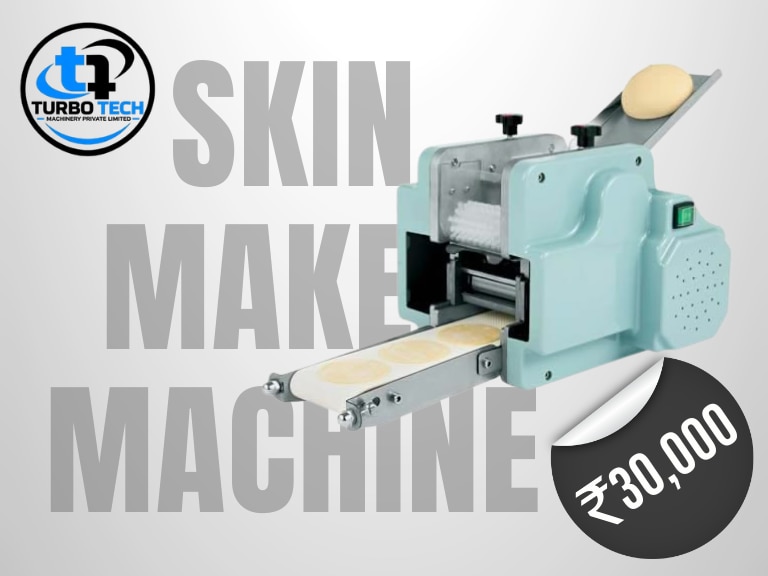 | Dumpling Wrapper Making Machines ₹30000 Preparing uniform wrappers is an important step in making dumplings and wontons. View product → |
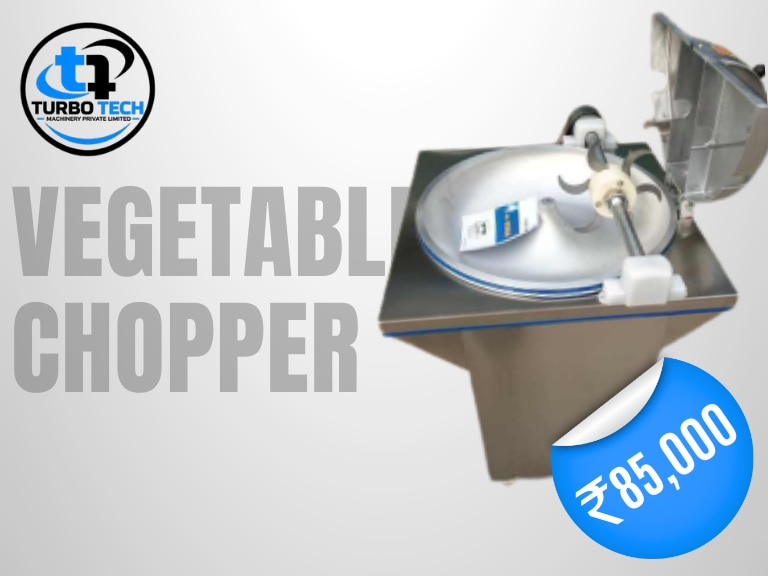 | Commercial Vegetable Processing Machines ₹85000 Preparing vegetables for fillings and bulk cooking can take considerable time when handled manually. View product → |
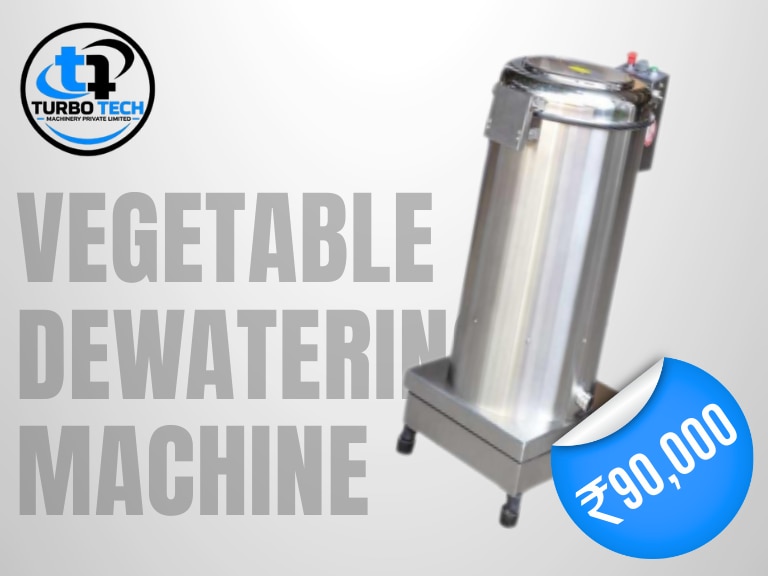 | Vegetable Dewatering Machines ₹90000 Excess moisture in prepared vegetables can make filling preparation more difficult to manage. View product → |
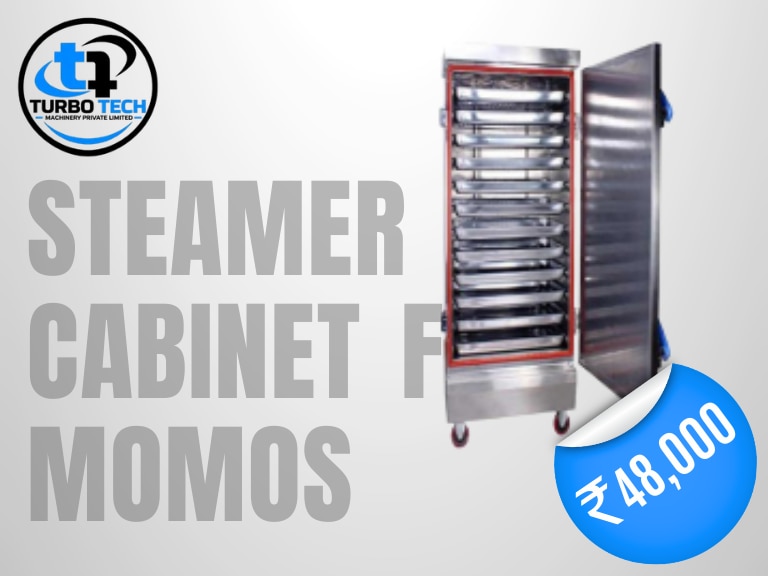 | Commercial Food Steamers ₹48000 Steaming momos in batches requires equipment that fits the kitchen’s production volume and available space. View product → |